A binder is the glue that holds pigment to a surface; a medium is what you add to change how the paint handles. We sell the few that a painter mulling at home actually uses, in the quantity that will be used before it turns. Each entry says what it is, which pigments it suits, how it is mixed, how long it keeps, and how the paint made with it dries and ages.
The dried sap of the acacia, sold as clear lumps or as a ready solution. Dissolved in water it is the binder of every watercolour and gouache, and the first binder we point a beginner at, because it washes off the slab and forgives every mistake.
Suits
Every earth, chalk, the synthetic ultramarine and the two organics. Coarse minerals such as azurite hold better in size or egg.
Mixing
Dissolve the lumps in warm water overnight and strain through muslin. Mull the pigment into the solution on the slab; add a drop of honey for a pan that stays soft.
Keeping
The solution keeps for a few weeks in a cool jar and will tell you when it has gone. Dried pans keep for years and re-wet with a brush.
Drying and ageing
Dries by evaporation in minutes, stays soluble for ever, and does not yellow. The film is thin, so the paper does half the work.
Linseed oil
oil paint, cold pressed
Pressed from flax seed without heat, filtered, and left otherwise alone. It is the binder of most oil paint that has ever been made, and the one whose habits every other oil is measured against.
Suits
All the earths, the synthetic ultramarine, phthalo green, quinacridone rose and both blacks. Chalk goes translucent in it, which is useful in a ground and disappointing in a white.
Mixing
Wet the pigment with a few drops, work it to a stiff crumb with the knife, then mull. Add oil a drop at a time; the amount each pigment wants is on its entry.
Keeping
The oil itself keeps for a year or more in a full, capped bottle. Mulled paint keeps for a week or so under a skin of oil or in a sealed tube.
Drying and ageing
Dries by oxidation over days to weeks, the umbers first and the blacks last. The film yellows a little with age and more in the dark, which is why an oil painting kept under a cloth comes out warmer than it went in.
Walnut oil
oil paint, pale and slow
Pressed from the nut, paler than linseed and slower to dry. Painters keep it for whites and pale blues, where linseed's yellowing would show.
Suits
Chalk in small amounts, the blues, quinacridone rose and any mixture you want to keep cool.
Mixing
Exactly as linseed; it wets a pigment a little more easily and the paste feels softer at the same proportion.
Keeping
Goes rancid sooner than linseed: buy small, keep cold, and smell it before use.
Drying and ageing
Slower to dry, less prone to yellowing, and a slightly softer film. Thin layers over a linseed underpainting are its natural place.
Egg tempera
yolk, water, pigment
We do not sell eggs, obviously, and we say so on the shelf label. What we sell are the parts of a tempera kit that keep: the pigments that suit it, distilled water, a little linseed for the emulsion if you want one, and the muslin and jars for straining and storing the paste.
Suits
Earths of every kind, chalk, azurite and malachite in their coarse grades, and bone black. It is the binder the copper minerals were made for.
Mixing
Separate the yolk, roll it dry on a cloth, pierce the sac into a jar and add an equal measure of water. Grind the pigment to a paste in water first; mix with the yolk only as much as you will use that day.
Keeping
Pigment-and-water pastes keep for weeks in a jar under a film of water. The yolk keeps a day; the mixed paint keeps an afternoon.
Drying and ageing
Touch-dry in minutes, hard in weeks, and the film goes on hardening for a year. It does not yellow and takes a soft polish with a cloth once cured.
Rabbit-skin size
grounds and distemper
An animal glue sold as dry granules. Soaked and warmed it is the size that seals a canvas or panel, the binder of a chalk gesso, and the glue in a distemper wall colour.
Suits
Chalk above all; then any earth for distemper, and the copper minerals, which keep their sparkle in a lean glue better than in oil.
Mixing
Soak the granules in cold water until they swell, then warm gently in a bath. Never let it boil, and never leave it hot longer than the job needs.
Keeping
Dry granules keep indefinitely if kept dry. Made-up size keeps a few days in the cold and turns quickly in a warm room.
Drying and ageing
Dries by evaporation, tightens as it dries, and stays sensitive to damp for ever. That sensitivity is why a gesso panel wants a dry wall.
Honey
watercolour plasticiser
A drop of honey, or of glycerine where you would rather not use it, keeps a home-made watercolour pan soft enough to lift with a wet brush. Too much and the pan never dries; too little and it cracks in the pan. The entry for gum arabic gives the proportion in words rather than numbers, because it depends on the pigment.
Chalk gesso
size and chalk, layered
Not a product we bottle but a recipe we stock the parts of: warm size, chalk, and patience. Laid in several thin coats on a panel and sanded, it is the white ground beneath tempera and beneath a lean oil painting.
Stand oil
linseed, thickened by heat
Linseed oil heated without air until it thickens to a syrup. A few drops in a mulled paint make it level and enamel-like; used neat it is a glazing medium that dries to a tough, slightly glossy film that yellows less than raw linseed.
Which binder, which pigment
The swatch card can be brushed out in the binder you name, so a pigment you are unsure of in oil can be seen in oil, not in a watercolour wash that flatters it.
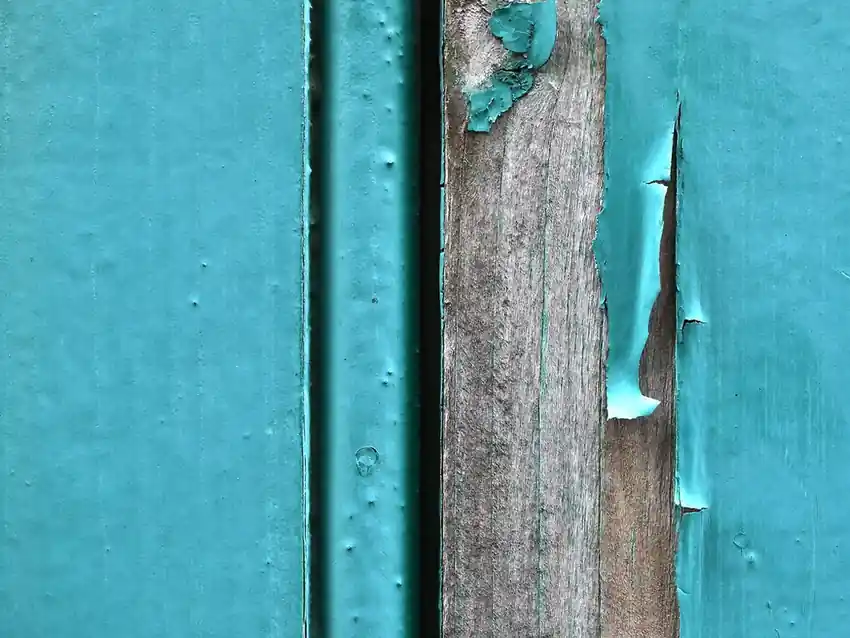
Old paint lifting from weathered boards. A film fails at the binder, not the pigment: the colour underneath is usually as strong as the day it was laid.